
Google is trying to close that gap. With YouTube Creator Partnerships now built directly into Google Ads, brands can search for creators, link sponsored videos to their ad accounts, and turn creator content into paid campaigns — all from the same dashboard they already use for search and display ads.
The bigger picture: influencer spend has historically flowed to agencies and platforms outside Google’s ecosystem. By making creator collaboration native to Google Ads Services, Google keeps more of that budget inside its own system, competes more directly with similar programs on TikTok and Meta, and adds authenticity to its ad inventory that algorithmic targeting alone can’t offer.
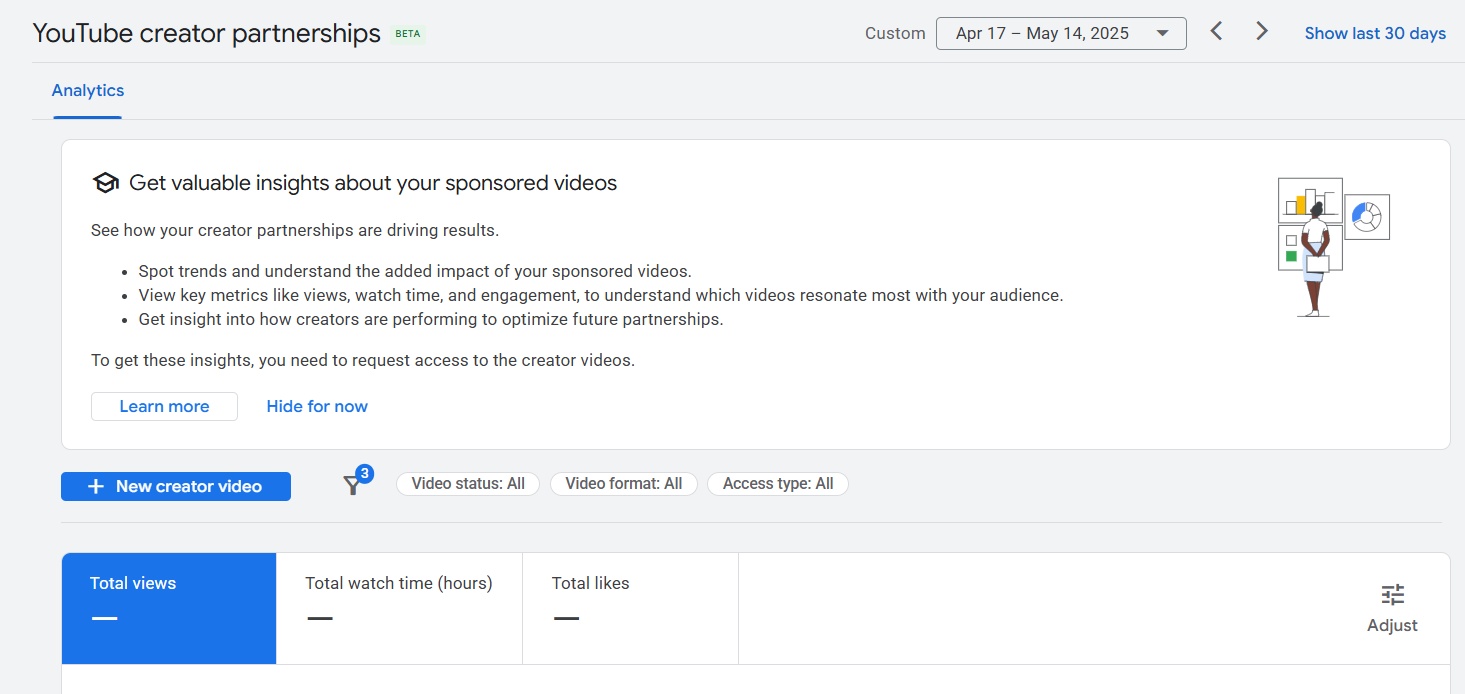
Inside Google Ads, the feature is accessed from Tools → YouTube Creator Partnerships, with up to four tabs depending on account eligibility: Overview, Creator search, Management, and Analytics.
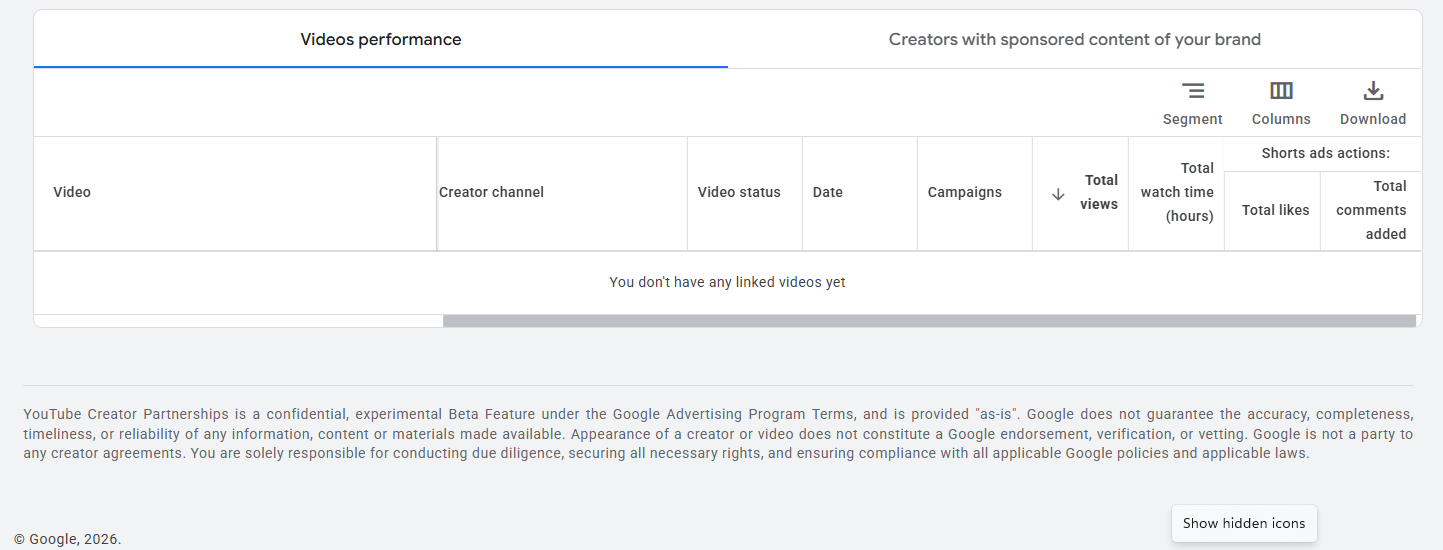
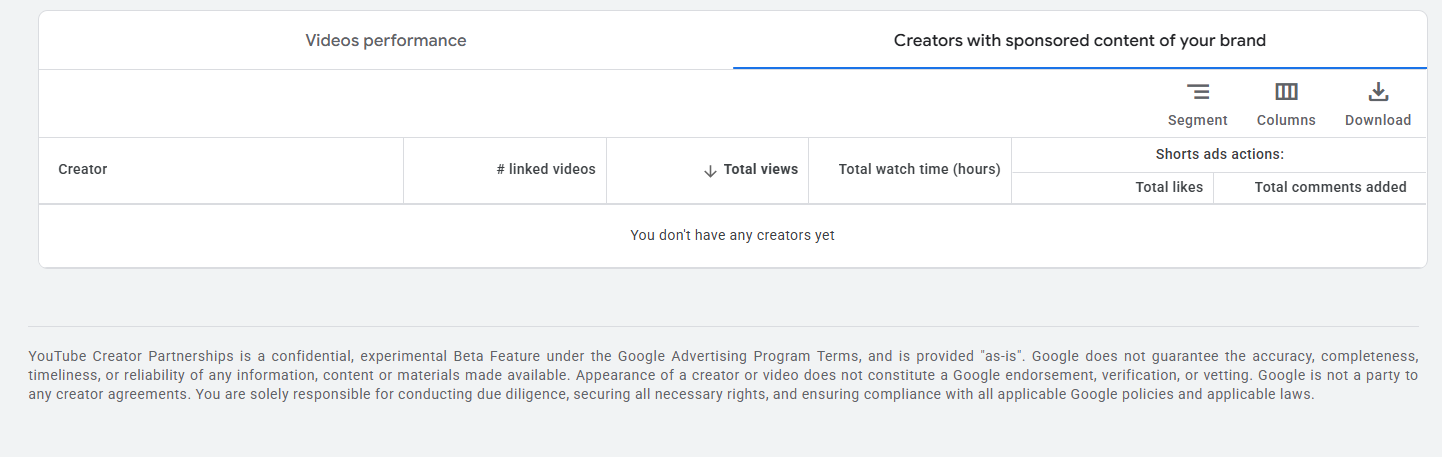
A combined view of organic and paid performance across two sub-views: Videos performance (video, creator channel, status, date, campaign, views, watch time, and “Shorts ads actions” covering likes and comments) and Creators with sponsored content of your brand (the same metrics rolled up by creator).
Brand-initiated: After a creator publishes a video, a brand (or its agency) can request access. The creator gets notified by email, push, and inbox alerts, and can accept, decline, or turn on automatic acceptance for future requests from that same brand.
Creator-initiated: From Create → Add details → Monetization → Paid promotion & brands, creators can select an already-reported brand deal, search for a new brand, or generate a shareable access code that auto-links the video once the brand clicks it.
1. Organic ad revenue (unaffected). Standard AdSense-style monetization — the usual YouTube Partner Program split between creator and YouTube — continues exactly as before. Granting or removing brand partner access doesn’t change it.
2. Paid promotion via Creator Partnerships Boost (handled outside the platform). When a brand pays a creator to use their video as a paid ad, that fee is negotiated directly between them as an offline agreement — the same way traditional sponsorship deals have always worked. Google isn’t a party to that payment and doesn’t take a cut of it; what Google earns is the standard ad spend the brand pays to run the campaign itself.
For brands: one platform for discovery, linking, and activation; better data for evaluating creator fit before committing budget; a way to convert organic sponsored content into scalable paid ads; lower barrier to entry after the removal of minimum spend requirements.
For creators: a more structured path to brand deals without relying solely on agencies or cold outreach; more visibility to brands actively searching their category; clear disclosure and consent steps built into the process.
Vs. traditional influencer marketing: Traditional brand-creator deals run through agencies, marketplaces, or direct outreach, disconnected from a brand’s ad infrastructure — performance data lives in spreadsheets, not dashboards. Creator Partnerships narrows that gap by folding creator content into a brand’s existing measurement and budgeting systems, without fully replacing agencies for negotiation or creative direction.
Vs. the standard Google Ads model: Regular YouTube advertising uses automated auction targeting — a brand sets criteria like topic or audience, and ads run against any matching content with no relationship to the individual creator. Creator Partnerships requires explicit creator consent, turns the video itself into the ad creative, and is built around an identifiable brand-creator relationship — a curated layer sitting on top of the same underlying auction infrastructure, not a replacement for it.