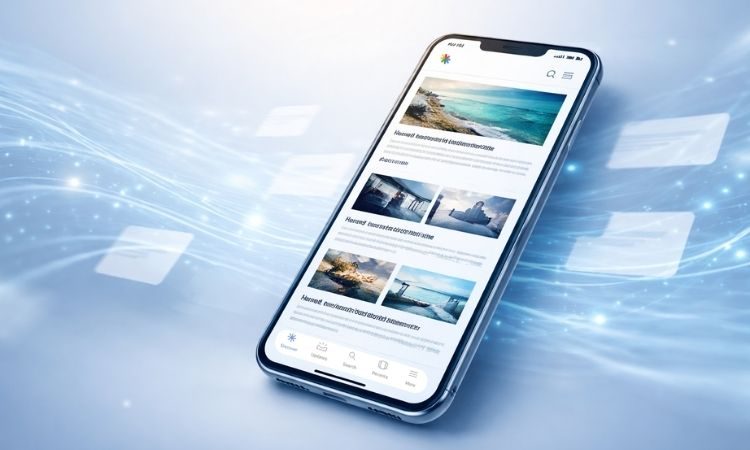
Google Discover is a personalized content feed that appears inside the Google mobile app and mobile search experience. Instead of waiting for users to type a query, Discover proactively shows articles, news, videos, and topic-based content aligned with a person’s interests, browsing behavior, and engagement patterns.
This makes Discover fundamentally different from traditional search. Search responds to intent; Discover predicts curiosity. Users simply scroll through a stream of content chosen specifically for them, often covering news, lifestyle, technology, hobbies, finance, and local updates.
The goal behind Discover is simple—deliver useful, relevant information before a search even happens.
From a user perspective, this creates a continuously updated feed of interesting content without effort. From a publisher’s perspective, Discover becomes an additional traffic channel beyond traditional search rankings.
Key ideas behind Discover include:
Importantly, no special technical markup is required to appear in Discover. If a page is indexed and follows Google’s content policies, it is eligible—though not guaranteed—to be shown.
In early February 2026, Google released a major algorithm change focused specifically on Discover.
Unlike traditional core updates that impact search rankings, this update targets how content is selected and ranked inside Discover’s personalized feed.
Discover is now more sensitive to geographic context. Content connected to a user’s country or region may receive higher visibility compared to broadly global material without local signals.
The update places greater emphasis on trustworthy, genuinely helpful information rather than exaggerated or misleading headlines designed purely to attract clicks.
Clear, accurate titles and meaningful content depth now matter more than emotional hooks or sensational phrasing.
Discover increasingly evaluates subject expertise instead of relying only on overall site authority.
Websites that previously received significant Discover traffic may notice fluctuations as the new system settles. Content quality, originality, and audience relevance are now more critical than ever.
Strategies must now include:
Many service-based or purely commercial websites historically receive little Discover traffic.
This update doesn’t change that dramatically—unless those businesses begin producing informational, story-driven, or educational content aligned with user interests.
To align with Discover’s evolving signals:
These principles closely mirror Google’s broader focus on helpful, people-first content—but applied within a personalized discovery environment.
Google Discover is no longer just an experimental traffic source. With the February 2026 core update, it is becoming a more refined, quality-driven ecosystem centered on relevance, trust, and expertise.
For publishers willing to focus on meaningful content and genuine audience value, Discover still offers significant visibility opportunities.
For those relying on shortcuts or generic material, the path forward is clear: adapt to quality-first publishing or risk fading from personalized feeds.