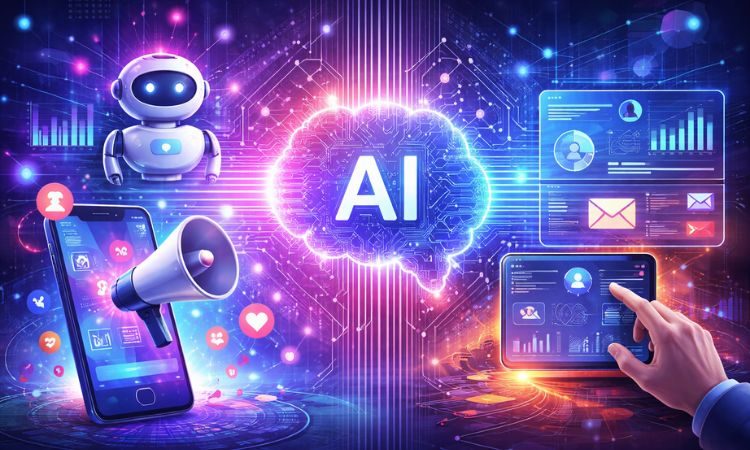
This guide explores how AI is transforming marketing strategies and provides actionable insights that can help businesses stay ahead in a competitive digital landscape.
AI in marketing involves using technology to analyze data, predict customer behavior, and automate repetitive tasks. Unlike traditional marketing methods that rely on assumptions, AI allows marketers to make decisions based on real-time insights.
A waiter takes your order from the table to the kitchen
And brings the food back without you needing to go inside
APIs do the same thing.
Generate blog posts, social media updates, and ad copy efficiently while optimizing content for your audience’s interests.
Provide instant, round-the-clock support for customers, answer frequently asked questions, and guide visitors through the sales process.
Analyze customer behavior and campaign performance to forecast trends, optimize marketing budgets, and make informed decisions.
Automate email campaigns, social media posting, and ad management, freeing marketers to focus on strategy and creative work.
Consumers expect tailored experiences. AI can help marketers deliver personalized recommendations, content, and promotions for each individual based on their behavior and preferences.
Use AI to group customers into meaningful segments and send targeted messages that resonate with each group.
Leverage AI to predict which campaigns are likely to succeed, helping to optimize resource allocation and maximize ROI.
AI chatbots can handle customer queries, provide product recommendations, and even capture leads, all while improving user experience.
AI enables marketers to monitor campaigns in real time, analyze performance metrics, and adjust strategies quickly for better results.
AI is expected to become even more advanced in the coming years:
Businesses that adopt AI strategically now will gain a significant competitive advantage in 2026 and beyond.
No manual work, no confusion — everything runs automatically.
No manual work, no confusion — everything runs automatically.
AI is transforming digital marketing from guesswork to precision strategy. By using AI tools for personalization, predictive analytics, and automation, marketers can deliver better experiences, optimize campaigns, and drive growth.
In 2026, smart marketing isn’t about luck or magic—it’s about strategy powered by AI.