
Google rolled out a major spam update on August 26, 2025, affecting all languages and every country. It’s the first official spam-focused update in eight months. Websites everywhere saw changes in rankings, indexing behaviour, and traffic during the rollout. According to Google’s Search Status dashboard, the rollout was completed on September 22, 2025 at 23:14 PDT.
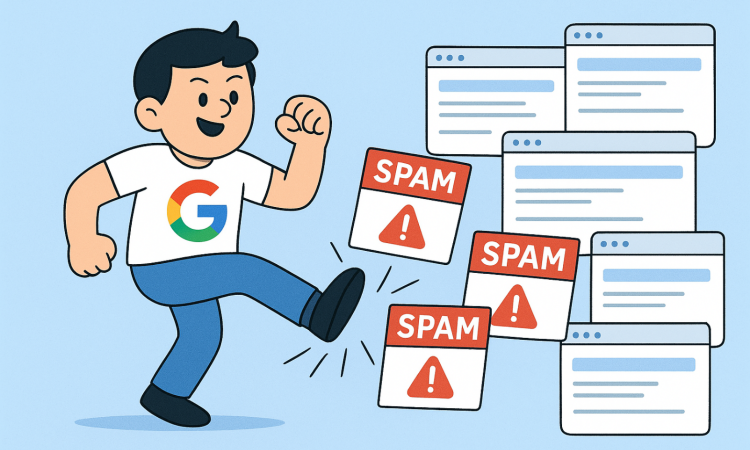
1. Google’s detection systems are being fine-tuned to catch more types of spam. Behaviours that violate its spam policies — like manipulative links, fake reviews, keyword stuffing, or creating low-value content just to rank — are likely being more severely penalized.
2. Websites reported big fluctuations in organic traffic, especially right after the update’s start. Some sites dropped rapidly, then partially recovered or saw further changes after a few days.
3. Indexing became slower for many. New content took longer to show up in search results, and some pages were delayed. Also, Discover content (if used) showed delays in visibility.
1. Monitor organic traffic in your analytics starting from August 26 — see if there is a steep drop in search traffic.
2. Use Google Search Console to check for indexing delays and performance drops in “Performance” metrics.
3. Look for messages in Search Console (manual actions or policy violations), though many issues may be algorithmic.
4. Check your backlink profile – see if any links are coming from low-quality or spammy sites.
5. Review content: see if there is duplicate or very thin content, unnatural keyword repetition, or fake review activity.
• genuine value,
• good user experience,
• trustworthy content, and
• clean, real-user reviews
…stand a better chance of avoiding penalties and eventually recovering if impacted. This isn’t about one small change; it’s about aligning the entire site with Google’s policies and building trust over time.
a). What kinds of spam are targeted?
b). Is the effect immediate?
c). Can you fully recover?